Horehound
Marrubium vulgare
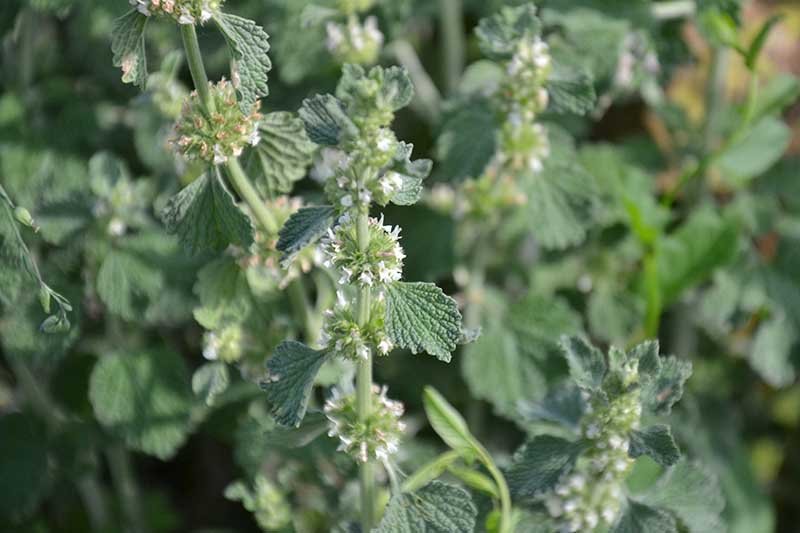
Latin Name: Marrubium vulgare
Common Name: Farasiun (Arabic); Eduosmos agrios (Greek); Farasiyun (Persian); Marrubio (Spanish)
Family: Laminacaea
Contraindications: Do not take if pregnant or chest-feeding.
Native To: Europe, Asia, Africa; Naturalized in Canada, north and south america.
Botanical Description: flowering, perennial, deciduous herb; spreads slowly and at maturity (in 2 to 5 years), it can reach a height of 2 feet with an equal width. The bloom season is long with flowers appearing from June to November
Habitat: prefers full sun in sandy, dry soil
Parts Used: Leaves and flowering tops
Key Constituents:
Marrubiin, a diterpene lactone, with premarrubiin
Diterpene alcohols: marruciol, marrubenol, sclareol, peregrinin, dihydroperegrinin
Volatile oil, containing [[alpha]]-pinene, sabinene, limonene, camphene, pcymol, [[alpha]]-terpinolene
Alkaloids; traces of betonicine and its isomer turicine
Miscellaneous; choline, alkanes, phytosterols, tanins
Herbal Actions: Expectorant, anti-spasmodic, bitter, vulnerary, emmenagogue
Taste: Bitter, Pungent, Astringent
Energetics: Hot and Dry
Some Ways To Use:
Stop Spastic Cough and Soothe Sore Throat— Antispasmodic nature of horehound helps relax smooth muscles of bronchi which helps to decrease spastic cough. Horehound has a mild analgesic impact that supports in soothing sore throat.
Cough up mucus in a Wet Cough/Decongest Upper and Lower Respiratory System — Horehound contains tannins that help to dry up and thin excess mucus. Bitter principles, Marrubiin and premarrubiin, stimulate the production of mucus which supports in pushing out old mucus.
Break Fever — The volatile oils in horehound promote blood flower towards the surface of skin which causes pores to open up and allows excess heat to escape via sweating. Best to have horehound as a hot tea to gain this benefit.
Recipes
Wet Cough Syrup>> Dry your horehound and save it to make a cough syrup for wet coughs. You’ll be receiving elecampane and thyme in the coming months.
Horehound Honey:
Fill jar 1/4 of the way with dry horehound.
Fill the rest of the jar with honey. Use chopstick to make sure the honey moves down to the bottom of the jar.
Let the honey infuse for 4-6 weeks, flipping it a couple times a day.
Strain herb out of honey by straining through cheesecloth or consume honey with horehound still in it.
Add honey to tea or eat by spoonful when you have a wet cough.
Horehound tea:
Add 2tbsp of dried horehound to 1cup of boiled water. Let it steep for 10 mins. Add honey.
References:
Culpeper, N. (1995). Culpeper’s Complete Herbal, by Nicholas Culpeper. Wordsworth Editions Ltd.
Wood, M. (2008). The earthwise herbal: A complete guide to old world medicinal plants. Berkeley, CA: North Atlantic Books.
written by khadija khansia
This information is provided for educational purposes and is not intended to diagnose, treat, cure, or prevent any disease. Use with caution and consult with a doctor or herbalist before consuming if you are pregnant or on other medications. Please do your own research before consuming to know if this medicine is right for your body.