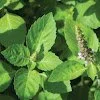
Perilla Frutescens spp.
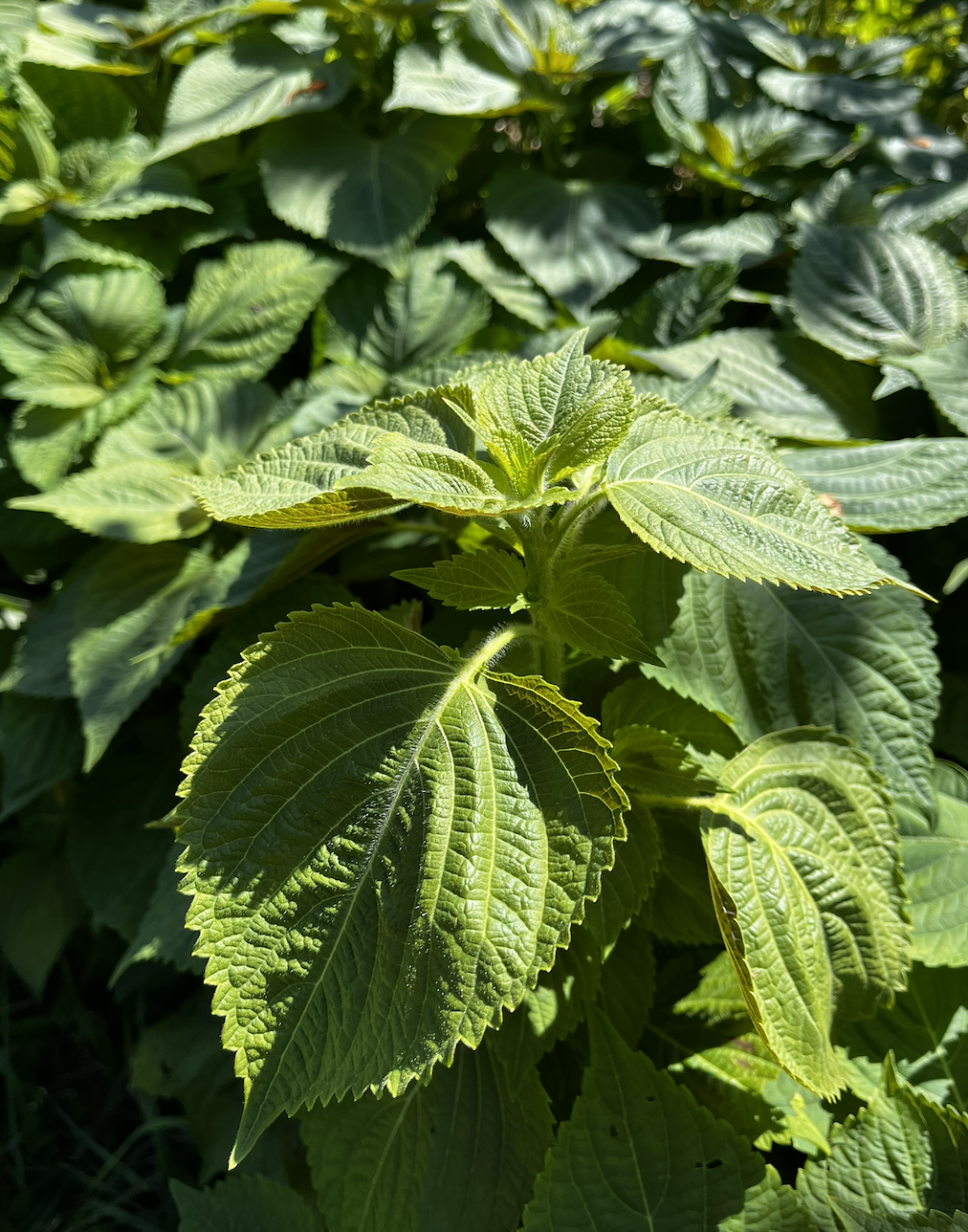
Perilla frutescens var. frutescens
Kkaennip (leaf) 깻잎 (Korean) Deulkkae (seed) 들깨 (Korean)
Egoma えごま (Japanese)
Baisu (Chinese)
Thoiding (Manipuri)
Kenie (Naga)
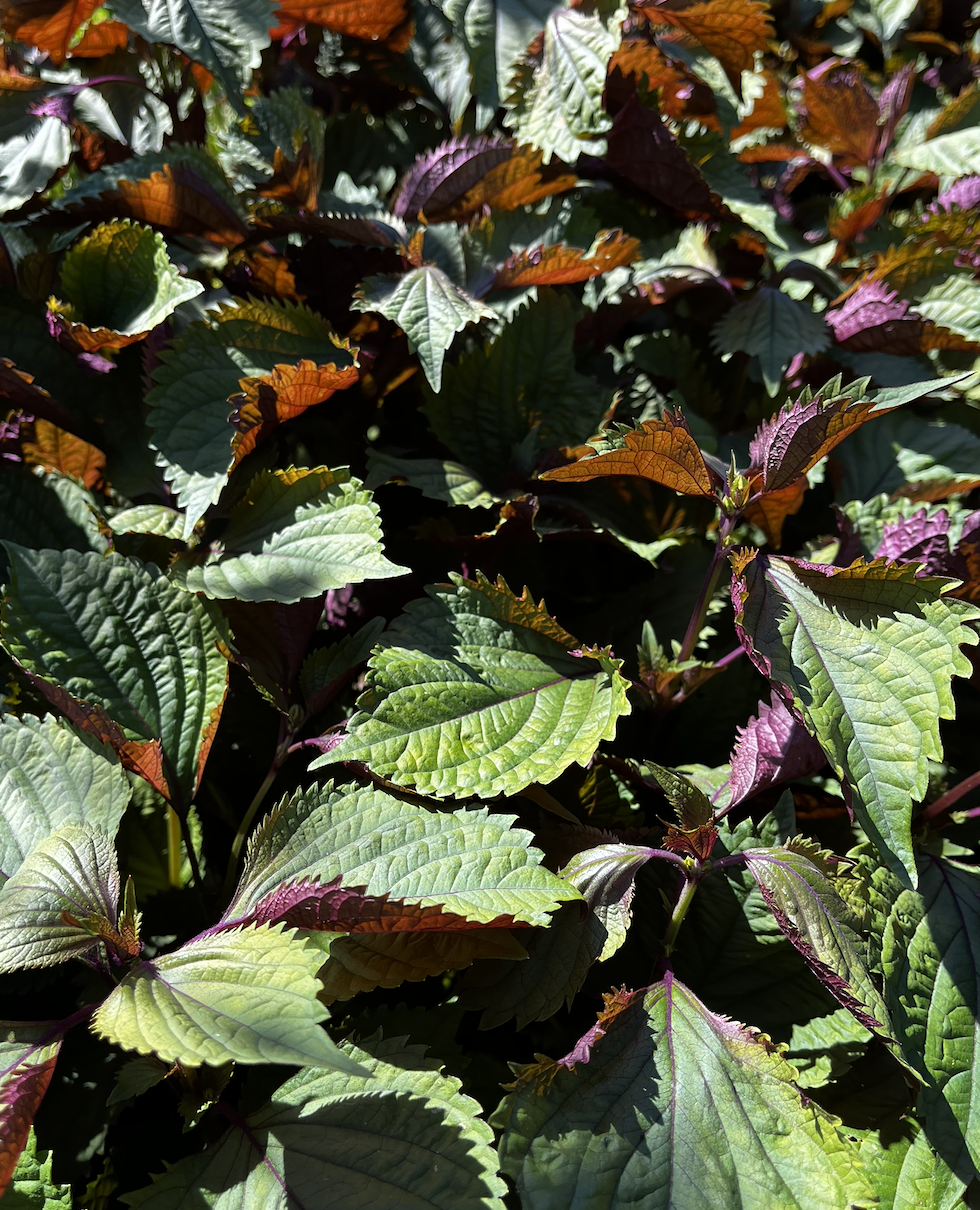
Perilla frutescens var. acuta
Cha Jogi 차조기 (Korean)
Cha Soyeop 차소엽 (Korean)
Aka shiso 赤紫蘇 (Japanese)
Zisu 紫蘇 (Chinese)
Latin Name: Perilla frutescens spp.
Common Names:
Perilla frutescens var. frutescens : Kkaennip (leaf) 깻잎 (Korean), Deulkkae (seed) 들깨 (Korean) , Egoma えごま (Japanese), Baisu (Chinese) , Thoiding (Manipuri), Kenie (Naga)
Perilla frutescens var. acuta: Cha Jogi 차조기 (Korean), Cha Soyeop 차소엽 (Korean), Aka shiso 赤紫蘇 (Japanese), Zisu 紫蘇 (Chinese)
Family: Lamiaceae
Contraindications:
Native To: Southeast Asia and Indian highlands
Botanical Description:
Perilla is annual plant that grows about 2-3ft tall, with hairy and square stalks (typical of the mint family). Oval almost heart like leaves with serrated edges grow opposite of each other, typically growing about 3-5 inches long and 2-4 inches wide. Depending on the variety, leaves are green with a variation of purple undersides.
Perilla is a day length sensitive plant, meaning it grows vegetatively with the lengthening days starting around the spring equinox (March-May). It flowers in response to short days, between the summer solstice and fall equinox.
There are many the domesticated cultivars used for food and medicine throughout Asia that have evolved to adapt to various environments and cultural uses. Most commonly perilla is split into two common categories: PA types (whose main compound is perillaldehyde) like Perilla frutescens var. crispa, acuta, and viridis are used medicinally and and PK types (whose main compound is perilla ketone) like Perilla frutescens var. frutescens is used as both fresh herb and oilseed crop.
Habitat: Perilla is capable of growing in a variety of habitats and can tolerate low fertility soils but thrive in moist conditions especially as the plants are beginning to grow.
Parts Used: leaves, stems, flower, seeds
Key Constituents: apigenin, Ascorbic-acid, beta-carotene, caffeic-acid, citral, dillapiol, elemicin, limonene, luteolin, myristicin, perillaldehyde, protocatechuic-acid, quercetin, rosmarinic-acid, and more
Herbal Actions: anti-asthmatic, anti-bacterial, antidote, antimicrobial, anti-pyretic, antiseptic, antispasmodic, antitussive, aromatic, carminative, diaphoretic, emollient, expectorant, pectoral, restorative, stomachic and tonic.
Taste: pungent, aromatic
Energetics: warming
Contraindications: Perilla should be avoided by individuals prone to excessive sweating, external dampness disorders, or heat-related illnesses.
Some Ways To Work With This Plant:
Respiratory Support: An infusion of the plant is useful in the treatment of asthma, colds, cough and lung afflictions, influenza prevention,
Digestion Aid: nausea, vomiting, abdominal pain, constipation, food poisoning and allergic reactions (especially from seafood),
Anti-inflammatory: Helps reduce inflammation, making it beneficial for respiratory tract conditions.
Anti-allergic: Perilla helps alleviate allergic reactions by modulating histamine responses.
Immune-boosting: Stimulates the body’s resistance, often used for the prevention of colds and flu.
Herbal Preparations:
Fresh and dried perilla leaves can be used for tea. For a soothing digestive tea blend, add mint and enjoy warm with a touch of honey if desired. If using fresh leaves, 2-3 chopped or crushed leaves is enough for 1 cup. If using dry, 2tbsp per 8oz of water.
Fresh leaves can be added to salads, soups, sushi, and stir-fries, serving as both a seasoning and a garnish. Here are a few ways to enjoy fresh perilla leaves featuring some popular Korean dishes
Pickled leaves known as Kkaennip Jangajji is a popular side dish that can help preserve the aromatic and accentuate the punchy flavors of perilla plus adding prebiotic benefits to support with digestion
References:
Perilla Grower’s Guide - Second Generation Seed
Wu X, Dong S, Chen H, Guo M, Sun Z, Luo H. Perilla frutescens: A traditional medicine and food homologous plant. Chin Herb Med. 2023 Mar 15;15(3):369-375. doi: 10.1016/j.chmed.2023.03.002. PMID: 37538863; PMCID: PMC10394348
Food as Medicine: Perilla. HerbalEGram, Vol 18, Issue 3, March 2021
written by Amara Ullauri
This information is provided for educational purposes and is not intended to diagnose, treat, cure, or prevent any disease. Use with caution and consult with a doctor or herbalist before consuming if you are pregnant or on other medications. Please do your own research before consuming to know if this medicine is right for your body.