Borage
Borago officinalis
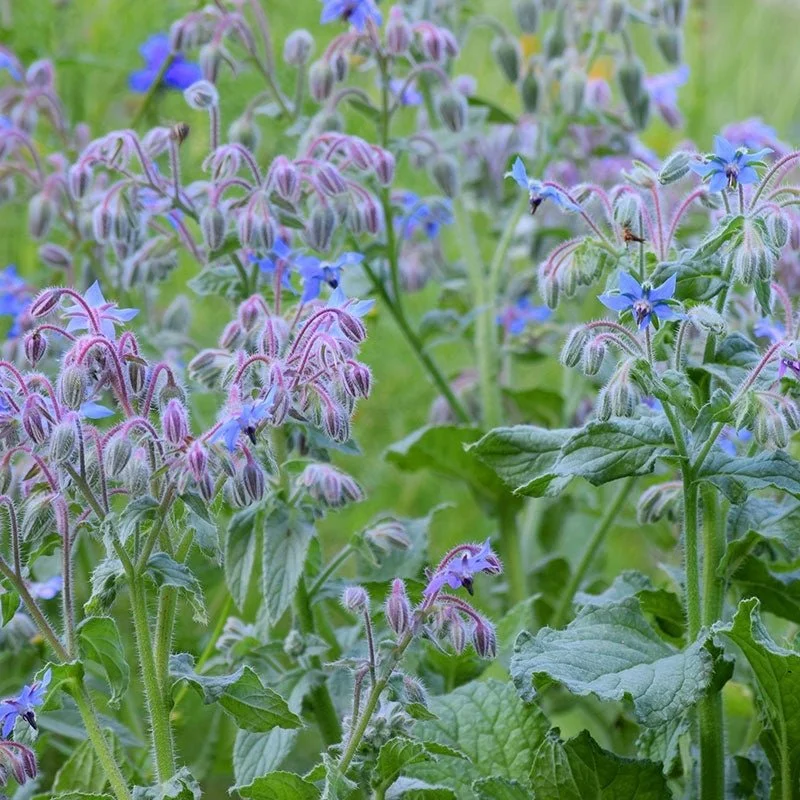
Latin Name: Borago officinalis
Common Name: Gol Gav Zaban or گل گاو زبان (meaning “flower of cow’s tongue” in Farsi), Star Flower, Bee Bread, burrage
Family: Boraginaceaeco
Contraindications: Contains pyrrolizidine alkaloids (PAs) in leaves. Young leaves have less PAs. Limit consumption of borage leaves (in any form) to 4-6 weeks at a time. Do not consume at all if you have liver disease. Do not consume if pregnant or chestfeeding.
Native to: SWANA region (Southwest Asia, North Africa); perhaps originated in Allepo, Syria?
Botanical Description: Is a spreading annual boasting a profusion of open racemes of beautiful, star-shaped, bright blue flowers from early summer to the first frost.
Habitat: can do well in poor soils like wastelands, cultivated soil, distrurbed roadsides. Need well drained soil. Prefers sun but will grow in the shade.
Parts Used: Young leaves and flower
Key Constituents: glycerides, fatty acids, high amounts of linoleic acid and gamma linolenic acid
Herbal Actions: Adaptogen, Astringent, Inflammation, Modulator, Diuretic, Demulcent, Expectorant, Emollient, Galactagogue, Nervine Trophorestorative
Taste: Sweet, Salty
Energetics: Cooling, Moistening
Some Ways to Work With This Plant:
Adrenal Fatigue + Long COVID: Borages sweet and salty taste indicate that it is nourishing, nutritive, and mineral rich. Borage leaves and flowers build up a burnt out endocrine system that has been under chronic stress and little to no rest. This type of wearing down of the system can come from a long sickness (COVID), demanding and unsustainable lifestyle, and/or exposure to chronic environmental stressors. Borage has proven to be an excellent ally for long COVID fatigue. It contains silicon which is great for rebuilding a frayed out nervous system. Making a tincture, vinegar, or tea from the fresh leaves is the way to go here. If your access to fresh borage leaves is limited, making a low proof tincture from fresh leaves will allow you to be able to access this medicine long term.
Respiratory Support + COVID Cough: Great for hard dry hacking coughs where the phlegm has been dried up and is thickened and hard to get out. Borage emollient properties softens hardened mucus while it’s demulcent properties moisten the dry respiratory tract. These properties are due to the starchy mucilaginous polysaccharides present in the leaves and flowers. As borage softens the hardened mucus by cooling down the system which then thins out the mucus, making it easy to expectorate out. Best to prepare a tea or syrup with the fresh leaves and flowers for this benefit.
Anti-Inflammatory: The main source of borage’s anti-inflammatory properties like in the gamma linolenic acid contained in it’s seeds. GLA is a omega-6 fatty acid that produces prostaglandin E1 which reduces inflammation in the body—specifically in the cardiovascular system and the skin. Borage seed oil can also replace daily NSAID usage for chronic inflammation diseases like rhuematoid arthritis. The process of cold-pressing borage seeds requires a great quantity of plants to it’s best to purchase cold-pressed borage seed oil from a supplement shop. Take max 500mg/day. Low levels of magnesium, vitamin c and zinc decrease absorption capacity of the oil. Be sure to add these supplements to your daily routine if you are low in these nutrients.
IBS: The high content of mucilaginous polysaccharides found in the the leaves and flowers support it’s ability to moisten and coat irritated mucous membranes; the membrane tightening effect of tannins support in healing damaged tissue; and the allotonin supports in rebuilding damaged GI tissue from irritable bowl syndrome. To work with borage for these benefits, make a tea with the fresh leaves and flowers or make a syrup.
Herbal Preperations:
Tea:
Dry** Persian Herbal Flower Tea
some people say that dried borage leaves lose their potency quickly and to only work with fresh leaves. I’m not sure I agree with that because I have made tea from dried leaves and it has definitely had a strong sedating effect on my nervous system. Try it out and see if dried borage leaves do it for you. Let us know if it does #citizenscience
Fresh: 2tbs fresh herb in 8oz water of already boiled water. Steep for 1 hour.
Tincture: 1 part fresh young leaves : 1 part 70 proof alcohol to really get those mucilaginous, water soluble components out of the plant that support moistening and cooling respiratory system. Do not exceed more than 1 dropper 3x/day. Combine with equal parts milky oats and skullcap for a tincture that is supportive in building up frayed nerves.
Cough Syrup: Add 1oz fresh leaves to already boiled 2 cups of water. Steep for 1 hr. Strain out leaves and add 1/2 cup of honey and warm on stove so that honey and liquid could mix into each other well (do not exceed 110 degrees Fahrenheit). Bottle up and store in fridge. Take 1 tbsp up to 3x/day when you have a dry cough with harden gunky phlegm. Perfect for COVID respiratory issues! Combine with other respiratory herbs like marshmallow root, elecampane, and mullein.
References:
Hashemian, et al. Effectiveness of Borage plus syrup on COVID-19 patients in intensive care units. (2022). Available online: pubmed.ncbi.nlm.nih.gov
Sajah Popham, Borage Monograph.
Maya Blow, Class Notes (2020)
written by khadija khansia
This information is provided for educational purposes and is not intended to diagnose, treat, cure, or prevent any disease. Use with caution and consult with a doctor or herbalist before consuming if you are pregnant or on other medications. Please do your own research before consuming to know if this medicine is right for your body.