California Poppy
Eschscholzia californica
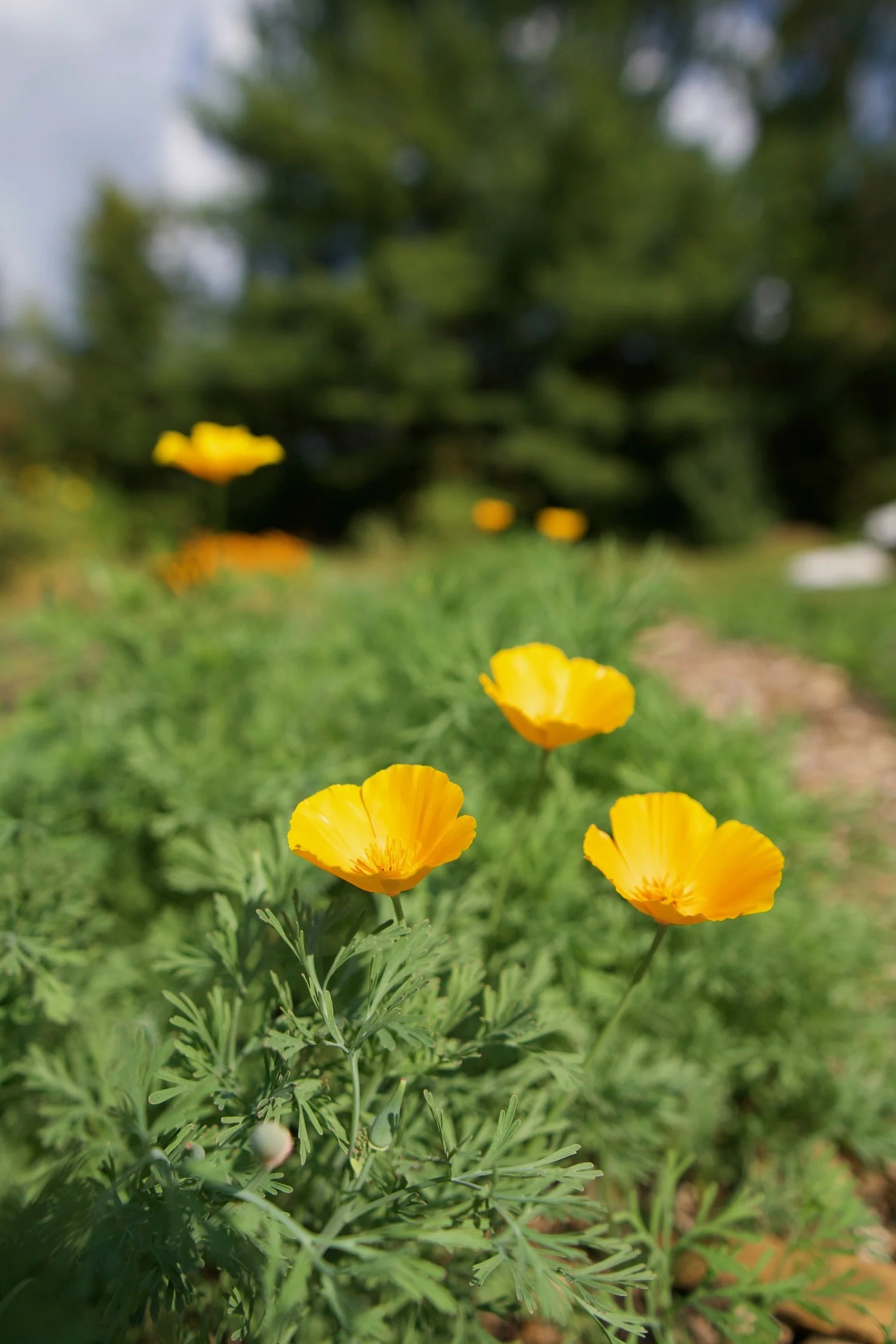
Latin Name: Eschscholzia californica
Common Name: Golden Poppy, California sunlight, cup of gold
Family: Papaveraceae
Contraindications: Do not use if breastfeeding; do not pair with sedatives; do not use with MAO inhibitors or benzodiazepines; do not use if pregnant; avoid in cases of depression
Native To: Pacific slope of North America, ranging from southern Washington to Baja California and east into the Great Basin
Botanical Description: Annual plants with feathery gray-green foliage. The four-petaled flowers, borne on stems 8 to 12 inches long, are usually pale yellow, orange, or cream in the wild
Habitat: Open, sunny grasslands, coastal dunes, chaparral and coastal scrub, dry plains, coastal prairies, open slopes of pine or redwood forests
Parts Used: Leaves, flowers, roots
Key Constituents: Isoquinoline alkaloids, including protopine, californidine, eschscholtzine, allocryptopine, sanguinarine, chelerythrine; flavone glycosides (rutin); and carotenoids
Herbal Actions: analgesic, anodyne, antispasmodic, hypnotic, nervine, sedative
Taste: Bitter
Energetics: Cool, dry, yin
Some Ways to Work With This Plant:
Anxiety: Supportive in acute bouts of anxiety or during panic attack. Linked to the anxiety in the emotional heart which can show up as mild chest pain, palpitations, increased heart rate.
Insomnia: Supportive if helping a person fall asleep and have deep and continuous sleep without feeling drowsy the next day. Contains California poppy alkaloids named proptopine and allocryptine which act as weak stimulators of the binding GABAA receptor site, thus providing sedative effects. Supportive for hot, running mind that prevents sleep.
Pain: The juice of the root of the plant has been traditionally used by Yuki and Ohlone people for toothaches, headaches (externally), and stomach aches.
Herbal Preparations:
Tincture: 15-30 drops of the tincture, 1:2. 45% alcohol
Infusion: Use 1 teaspoon dried aerial parts per cup boiling water, infuse 10 min, and take one cup at bedtime to aid with sleep. 1-2 teaspoons of the herb steeped in 1 cup of boiling water.
Decoction: Add 1–2 teaspoons of dried root to 1 cup of water. Simmer on low heat for 20-30 minutes. Strain the liquid and drink it warm.
Vinegar/Oxymel: 1 part fresh plant matter, 2 parts apple cider vinegar. Store in cool, dark place for 2-6 weeks, shaking daily. Strain and add honey for taste if you prefer. Take directly on its own or add to warm water. Add to carbonated water for a relaxing alcohol free drink.
Infused oil: Place the dried chopped root in a glass jar and cover with oil. Seal the jar and place it in a sunny spot for 2-4 weeks, shaking daily. Strain and store in a dark glass bottle. Use topically for muscle pain.
References:
Tierra, M. The Way Of Chinese Herbs
Hoffmann, D. (2003). Medical herbalism: The science and practice of herbal medicine. Rochester, VT: Healing Arts Press.
written by khadija khansia
This information is provided for educational purposes and is not intended to diagnose, treat, cure, or prevent any disease. Use with caution and consult with a doctor or herbalist before consuming if you are pregnant or on other medications. Please do your own research before consuming to know if this medicine is right for your body.