Chamomile
Matricaria recutita
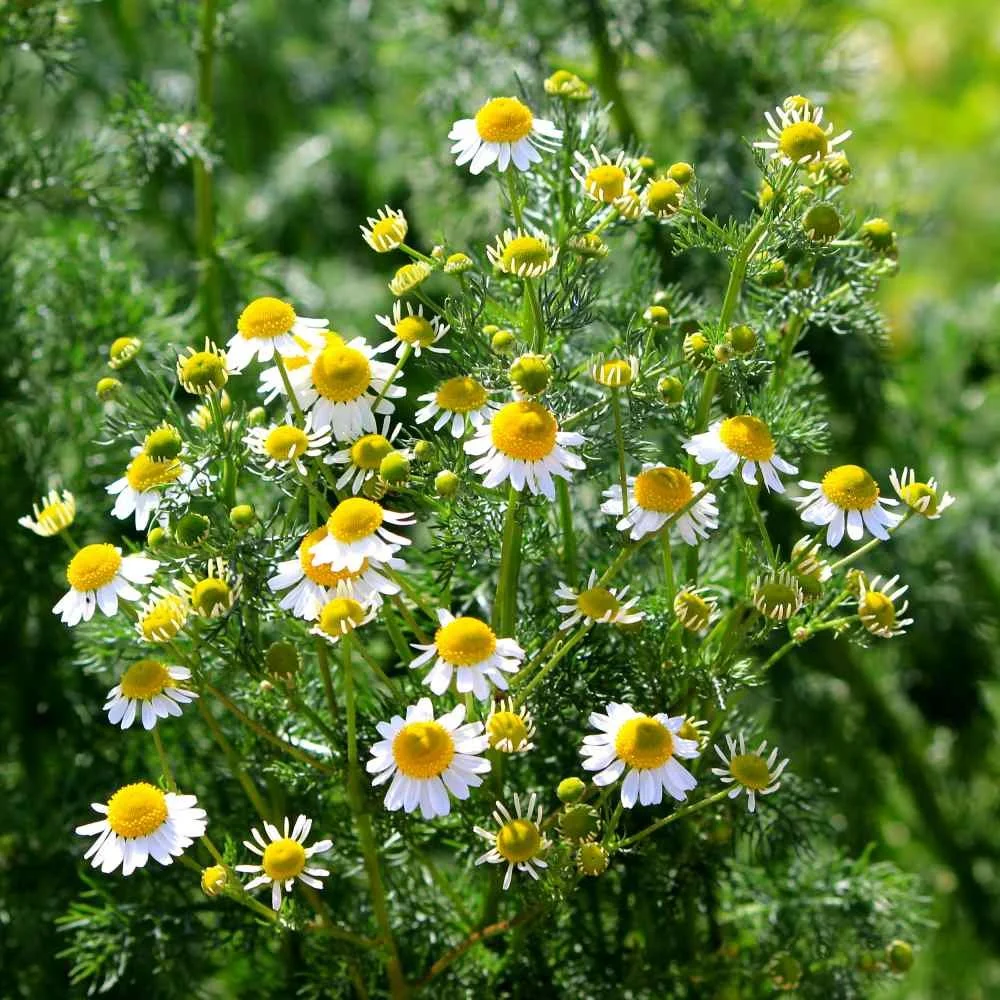
Latin Name: Matricaria recutita
Common Name: Chamomile, German Chamomile, Manzanilla, Maythen
Family: Asteraceae
Contraindications:
Allergy to plants in the Asteraceae family (e.g., ragweed)
Caution when using with CNS depressants or anticoagulants (e.g., warfarin)
Avoid during pregnancy in high doses (emmenagogue action)
Native To:
Temperate Europe, Asia, and North Africa; now cultivated globally (Germany, Hungary, Egypt, etc.)
Botanical Description:
Annual herb growing 10–80 cm tall with feathery leaves and small white daisy-like flowers with yellow centers. Sweet, apple-like scent. Produces royal blue essential oil due to chamazulene content.
Habitat:
Thrives in well-drained, sunny soils. Often found in fields, gardens, and disturbed areas.
Parts Used:
Aerial parts (primarily flowers)
Key Constituents:
Volatile oils (chamazulene, α-bisabolol)
Flavonoids (apigenin, luteolin, quercetin)
Coumarins
Bitter principles
Sesquiterpenes
Polyacetylenes
Herbal Actions:
Nervine sedative
Bitter carminative
Spasmolytic
Relaxant diaphoretic
Emmenagogue
Inflammation modulator
Antimicrobial
Vulnerary
Taste: Sweet, bitter, aromatic
Energetics: Cooling, drying, relaxing
Some Ways To Work With This Plant:
Nervine Sedative: Chamomile gently eases the nervous system and helps the body shift out of “fight or flight” and into a more rested, regulated place. It’s a great ally for folks who are anxious, overstimulated, fussy, or holding tension in the gut or womb. This is the plant for “babies of any age”—those who are sensitive, reactive, or easily thrown off. But chamomile doesn’t just take the edge off—it also nourishes the nervous system with its sweetness, helping rebuild strength after stress or burnout.
Digestive Relaxant + Bitter Carminative: Chamomile carries both aromatic oils and bitter compounds, which gives it a dual power: it wakes up digestion and soothes it. It helps get the digestive fire going while relaxing tension, gas, and spasms in the belly. It’s especially helpful when digestive discomfort is tied to emotions—after anger, grief, or stress. Think colic, indigestion, or IBS-like patterns that come and go. A strong tea before or after meals can support this system beautifully.
Spasmolytic (Anti-spasmodic): Chamomile helps release tension in smooth muscle tissue, especially in the gut and uterus. If you’re working with menstrual cramps, bloating, colic, or even a tight, dry cough—it can help unwind that holding. Its medicine isn't just physical, either. It’s also for folks who hold themselves tight emotionally—those who clench, brace, or feel like they’re gripping through life.
Relaxant Diaphoretic: When someone’s burning up with tension or fever—hot skin, dry mouth, flushed cheeks—Chamomile helps the body release that heat gently through the skin. It’s not a stimulating sweat-inducer like ginger, but rather a slow, soothing one—making it ideal for kids, elders, and anyone sensitive or depleted.
Inflammation Modulator: Chamomile is rich in azulene and chamazulene, deep blue volatile oils that cool inflammation in the gut, skin, and mucous membranes. Use it internally for gastritis, ulcers, or chronic digestive inflammation, and topically for eczema, acne, or pink eye. The steam from a strong tea can also help calm the sinuses and support upper respiratory health—especially during allergy season.
Emmenagogue + PMS Support: Chamomile gently encourages menstrual flow by relaxing smooth muscle, moving liver stagnation, and supporting emotional release. It’s a powerful yet gentle remedy for cramping, bloating, and irritability—especially for those who get fiery, frustrated, or easily overwhelmed before or during their bleed. Think of it as a warm hand on your lower belly, offering softness and ease.
Topical Wound Healer + Antimicrobial: Externally, chamomile shines as a vulnerary—it speeds healing, reduces inflammation, and helps prevent infection. It can be made into a compress or wash for burns, rashes, cracked nipples, swollen gums, or conjunctivitis. It’s gentle enough for sensitive skin and strong enough to earn a spot in any first-aid kit.
Childhood Ally: This is one of the most beloved herbs for children. Whether it's teething, colic, irritability, restlessness, or just general fussiness—Chamomile meets them where they are. A cooled tea can be used in a bottle, added to bathwater, or soaked into a cloth for sore gums. It helps settle little bodies and little spirits with safety and sweetness.
Herbal Preparations:
Infusion: add 1–4 tbs to 1 cup of already boiled water; cover the cup to prevent volatile oils from evaporating
combine with equal parts lemon balm, peppermint, and elderflower tincture for kids fever tincture
for a general digestive tea blend combine 4 parts dandelion, 4 parts chamomile, 4 parts peppermint, 4 parts marshmallow, 3 parts marshmallow, 1 part licorice
Tincture: Fresh (1:2, 50–60%), Dried (1:5, 40%)
combine with equal parts tulsi, lemon balm, skullcap, and motherwort tinctures for a tincture to support daily nervousness
Sitz Bath: Make a strong infusion of chamomile tea (remember to cover the lid to prevent volatile oils from evaporating). Let it cool down all the way and combine with Epsom salt for hemorrhoids or postpartum healing care
References:
Sajah Popham, Materia Medica Monthly Volume #24: Chamomile
Matthew Wood, The Earthwise Herbal
Karen Rose, Sacred Vibes Apothecary teachings
Amanda David, Rootwork Herbals
Ellingwood, American Materia Medica
Felter & Lloyd, King's American Dispensatory
David Hoffman, Medical Herbalism
written by khadija khansia
This information is provided for educational purposes and is not intended to diagnose, treat, cure, or prevent any disease. Use with caution and consult with a doctor or herbalist before consuming if you are pregnant or on other medications. Please do your own research before consuming to know if this medicine is right for your body.