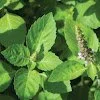
Mountain Mint
Pycnanthemum virginianum

Latin Name: Pycnanthemum virginianum
Common Name: Virginia mountain mint, American mountain mint, common mountain mint, mountain thyme, prairie hyssop
Family: Laminacaea
Contraindications: Avoid during pregnancy in high doses (emmenagogue action)
Native To: eastern Turtle Island
Botanical Description: Native perennial herb with erect square-shaped stems and aromatic narrow leaves. As its genus name suggests (pyknos meaning dense and anthos meaning flower) this plant has clusters of many small white flowers that bloom in succession beginning in the outer layers throughout the mid-summer.
Habitat: Despite its name, Mountain mint thrives in wet meadows and prairies. Like mints, this plants spreads through rhizomes into clusters in ideal conditions but can be kept contained in drier soil conditions.
Parts Used: Leaves and flowers
Key Constituents: volatile oils, mainly pulegone, menthone, thymol
Herbal Actions: diaphoretic, carminative, antiseptic, expectorant, bronchodilator
Taste: Sweet, slightly bitter
Energetics: Cooling, drying
Some Ways To Work With This Plant:
Respiratory support: expectorant and bronchodilator qualities soothe and clear up a cough to support in the treatment of colds, bronchitis, and pneumonia.
Digestive relief: helps to ease constriction in digestive system to release bloating, indigestion, cramping
Herbal Preparations:
Tea — Add 3 tbs dried leaf or handful fresh leaves to already boil 8oz water. Cover and let steep for 20 mins. Strain and drink hot or cold.
Herbal steam - to ease sinus congestion from allergies or a cold, steep a handful of fresh or dried mountain mint in boiling water, place a large towel over your head to catch the steam and hover over the pot for a few minutes to breathe in the aroma.
Poultice - use fresh leaves into to turn into a mash by chewing or crushing, helps to treat cuts, scrapes, bruises, stings, and bites.
Wound wash and baths - A decoction of the leaves helps to concentrate the antiseptic properties, add to baths to soothe skin irritation or use as a wound wash to treat inflammed wounds.
References:
Maas, M., F. Petereit, and A. Hensel. “Chemical Components of Essential Oils from Aerial Parts of Pycnanthemum virginianum and P. californicum (Lamiaceae) Plants.” Journal of Organic & Pharmaceutical Chemistry 21, no. 1 (2023). https://ophcj.nuph.edu.ua/article/view/273810
Foster S., Duke J.A. A Field Guide to Medicinal Plants. Houghton Mifflin; Boston, MA, USA: 2014
written by Amara Ullauri
This information is provided for educational purposes and is not intended to diagnose, treat, cure, or prevent any disease. Use with caution and consult with a doctor or herbalist before consuming if you are pregnant or on other medications. Please do your own research before consuming to know if this medicine is right for your body.