Anise Hyssop / Hisopo Anisado
Agastache foeniculum
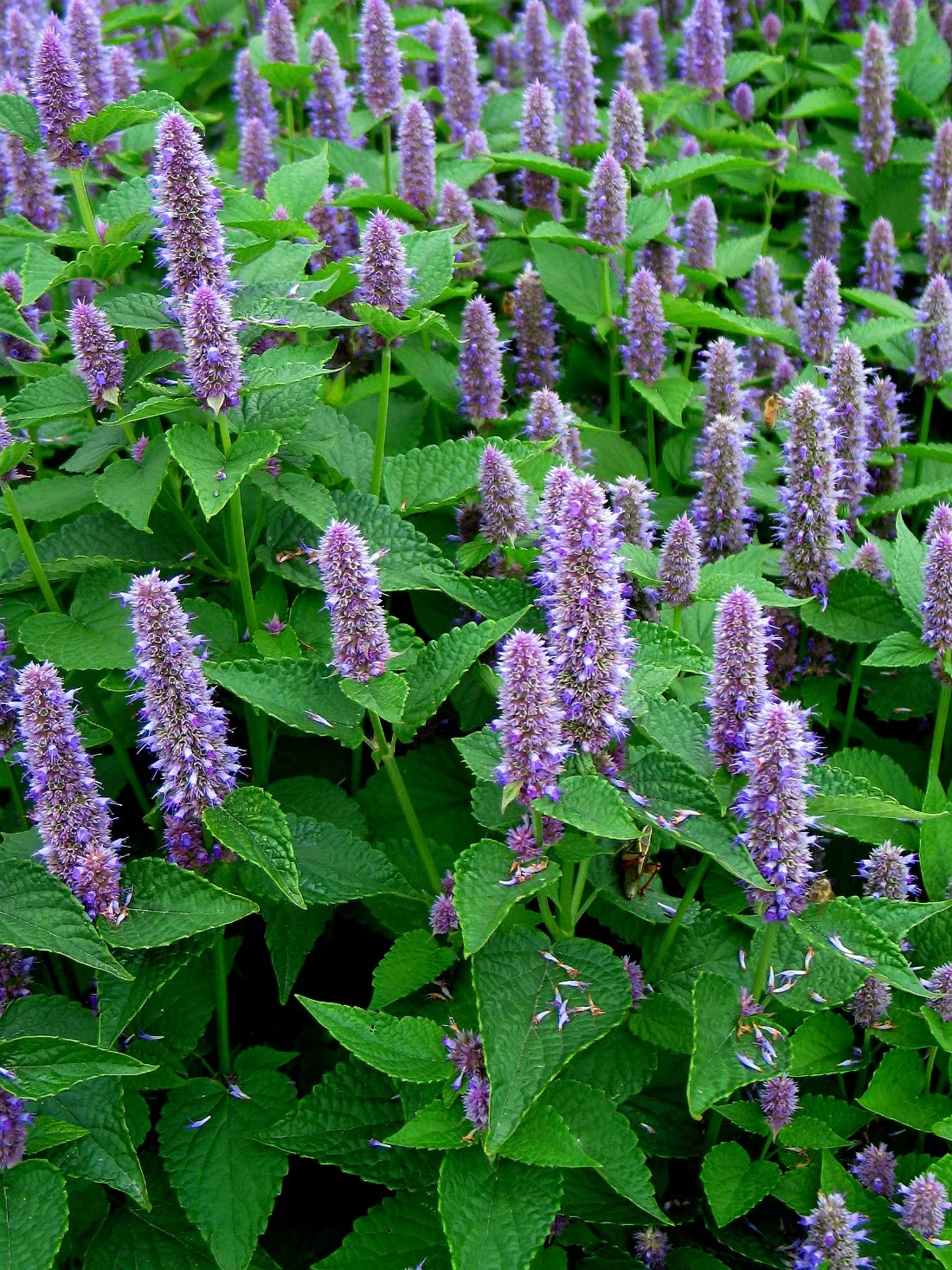
Latin Name: Hyssopus officinalis
Common Name:
Family: Lamiaceae
Contraindications: Due to it’s emmenagogue effects, do not take if you are pregnant and intending on carrying pregnancy to completion. To see how your medication may interact with this plant, check this database, consult with your local herbalist, and do your own research before working with any plants.
Native To: SWANA region (southwest Asia, north Africa); Southern Europe; naturalized on Turtle Island
Botanical Description: small shrubby, woody aromatic perennial with purple to blue fragrant flowers appear all summer and are attractive to butterflies. Hyssop is a self-fertile plant that has both male and female organs and is pollinated by bees.
Habitat: Resistant to drought, tolerates sandy soils and thrives in full sun and warm climates.
Parts Used: Budding aerial parts, leaf and flower
Key Constituents:
Diterpenes (marrubiin - bitter principle)
Triterpenoid saponins (oleanolic and ursolic acids)
Volatile oils (camphor, beta-pinene, pinocamphone, thujone, and many others)
Flavonoids (including diosmin and hesperidin)
Miscellaneous: hyssopin (a glucoside)
Tannins (primarily rosmarinic acid and other caffeic acid derivatives, 5-8%)
Resin
Herbal Actions: Antispasmodic, Expectorant, Diaphoretic, Immuno-modulating, Carminative, Emmenagogue, Mild Bitter Tonic
Taste: Acrid, Bitter, Pungent, Aromatic
Energetics: Warming, Drying, Stimulant/Diffusive, Relaxant
Some Ways To Work With This Plant:
Antispasmodic/Muscle Relaxant: The acrid and aromatic properties of hyssop support in relaxing muscle spasm and soothe overly tense nervous systems and stiff and cold muscles. Anise hyssop has an affinity to the respiratory, digestive, reproductive, circulatory, and immune systems so this antispasmodic relief can be applied to the smooth muscles in any of these systems. The diterpenes and volatile oils in hyssop contribute to its muscle relaxing properties. Both of these chemical constituents are most soluble in alcohol and glycerine.
Digestive Support: Hyssop is supportive for cold, sluggish, stagnant, cramped up/tense, bloated/gassy digestive system. It’s volatile oils stimulate blood circulation to the digestive system, relax the smooth muscles in the digestive system to relieve cramping, disperse stagnation, awaken the digestive organs and improving their functioning. The marrubin (bitter principle) that is found in hyssop supports bile production and secretion which supports elimination and improved assimilation of fats and oils. The volatile oils also have antiseptic properties which can eliminate bacterial growth build up from stagnant digestion. This is super helpful because bacteria can produce extra gas and contribute to bloating, gassiness, and cramping in the intestines.
Circulatory Stimulant: The volatile oils in hyssop support in releasing stagnation in the body by driving the blood to a specific region in the area; the increase in blood to that area warms the tissues up; the warming up of the tissue relaxes any tension/constriction (much like a warm bath does to our muscles); once the tissue releases tension it is not constricted in it’s motion and can properly function once more. Anise hyssops ability to do this makes it a diffusive herb. This quality makes anise hyssop a great support herb in a formula because it can break up stagnation and can diffuse the medicine of the other herbs to specific parts of body. All that is needed is a little bit of anise hyssop in your formula to achieve this goal.
Relaxant Expectorant: Anise hyssop is great for a thick and boggy respiratory infection coupled with a fever where there is an unproductive wet cough and thick and congealed phlegm that will not come up. It can also work for a dry cough where mucus is not being produced anymore and instead it is all congealed and gunked up in you. This is where anise hyssop shines! The resins support in thinning the mucus then the triterpenoid saponins are able to create a productive cough to let the thinned mucus out; the tannins and flavanoids support in healing the respiratory mucosa that may have become inflamed from all the coughing. The volatile oils and diterpines relax smooth muscles in the respiratory tract, soothing and calming spastic coughs that aren’t doing anything to get the mucus up and out. They are also antimicrobial so they support in reducing infection in respiratory system. The tannins in hyssop make hyssop a drying herb. This is perfect to dry up a respiratory system that is weighed down in mucus. Hyssop tea is best for receiving it’s expectorant qualities while hyssop tincture helps relax the muscles and reduce infection. Hyssop cough syrup is commonly made with 1 part hyssop tea with 2 parts honey, stored in the fridge and taken 1tbs at a time.
Emmenagogue: Hyssops’s volatile oils help increase flow of blood and bring on menses releasing stagnant blood and bring ing warmth to the reproductive organs relaxing muscles and easing cramping.
Herbal Preparations:
Tea – Infusion of 1-2 tsp dried hyssop in 1 cup boiled water, cover with plate and let it steep for 15-20 minutes, strain. 3 times per day.
Tincture —
(1 part fresh herb : 2 part 140-160 proof alcohol); 10-60 drops, 1-4x/day
(1 part dried herb: 5 parts 100 proof alcohol); 10-60 drops, 1-4x/day
Honey— pack jar with dried flowering tops and cover with honey. Let steep 2 weeks on sunny windowsill and strain through cheesecloth. Take spoonful as often as needed for sore throat, cough, tonsillitis, and laryngitis.
References:
Wood, Matthew. The Earthwise Herbal, Volume 1. North Atlantic Books. 2008. Page 297.
Hoffmann, David. Medical Herbalism: The Science and Practice of Herbal Medicine. Healing Arts Press, Pages 559-560
Skenderi, Gazmund. Herbal Vade Mecum. Herbacy Press, 2003. Page 203
Popham, S. Materia Medica Monthly: Hyssop Monograph
written by khadija khansia
This information is provided for educational purposes and is not intended to diagnose, treat, cure, or prevent any disease. Use with caution and consult with a doctor or herbalist before consuming if you are pregnant or on other medications. Please do your own research before consuming to know if this medicine is right for your body.