Yarrow / Milenrama
Achillea millefolium
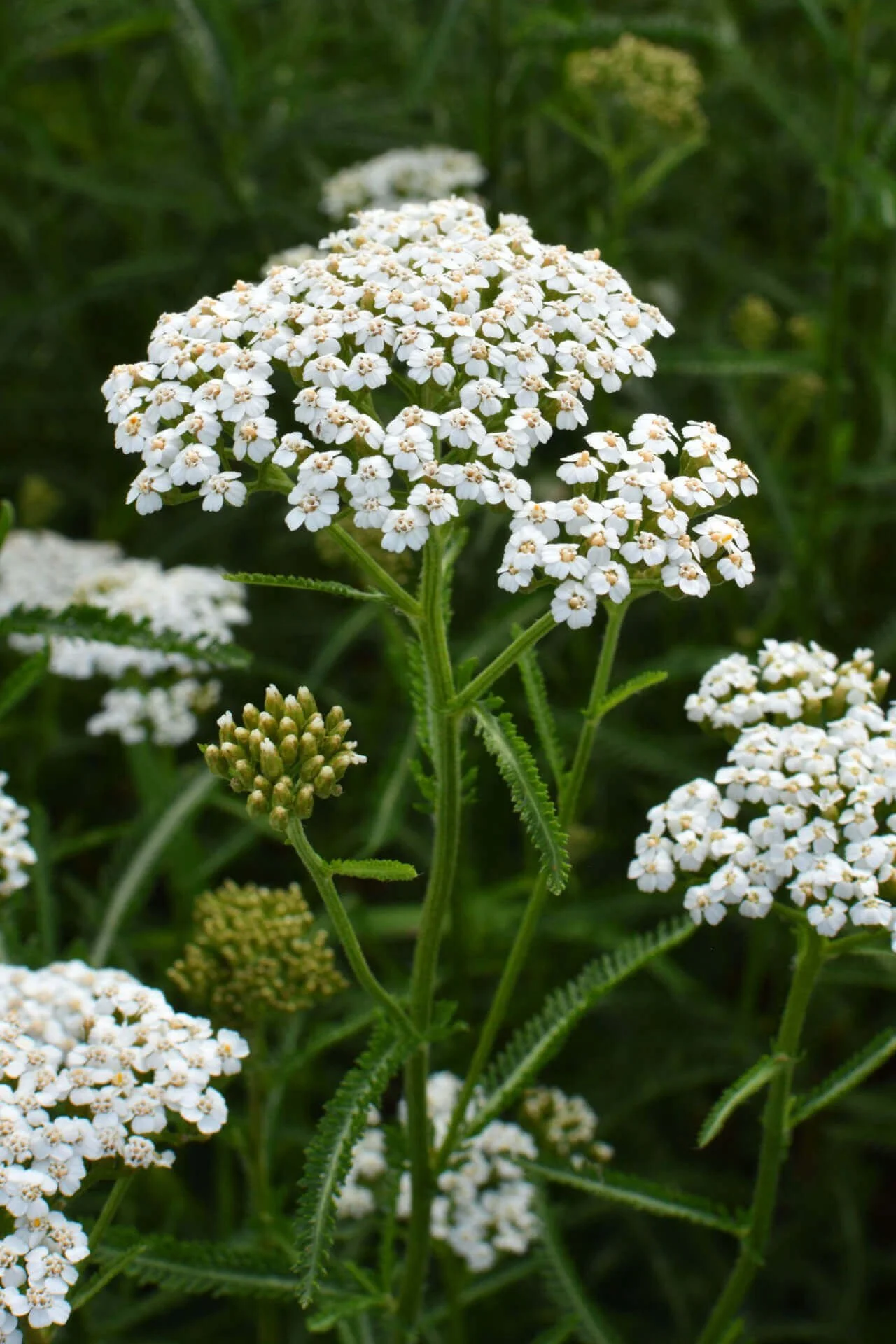
Latin Name:Achillea millefolium
Common Name: Common Yarrow, Waberowusk (Ojibwe name) Nosebleed Plant, Carpenter’s Plant, Milfoil, Soldier's Woundwort, Thousandleaf
Family: Asteracea
Contraindications: Overuse can be drying to system. Contains essential oil thujone in leaves which is neurotoxic in high doses. Use with caution. High doses may cause headaches, photosensitivity, and dermatitis. Do not use if allergic to Asteraceae family (daisy family). Do not take internally if pregnant and intending to keep pregnancy or if chest-feeding. Using yarrow for months may lead to photosensitivity and sensitive individuals may develop a rash. Can lower blood pressure slightly, so take with caution if taking blood pressure medication. Avoid using if you are on on blood thinners or have bleeding disorder. Discontinue internally 2 weeks prior to surgery. Increases gut motility, can potentially decrease absorption of drugs if taken simultaneously. To see how your medication may interact with this plant, check this database, consult with your local herbalist, and do your own research before working with any plants.
Native to: Europe and Asia; naturalized in temperate regions throughout the world, including Turtle Island.
Botanical Description: Has bipinnate, fernlike leaves. Leaves emerge from laterally spreading rhizomes that support multiple flower stalks growing 1-3 ft tall. Individual ray or disk-shaped flowers bloom midsummer to fall. Yellow and pink flower varieties are grown for landscaping and not grown for medicinal quality.
Habitat: Drought tolerant and found thriving in poor soil. Grows best in full sun and will not tolerate poorly drained soils. Prefers sandy, gravelly, lowm but will perform well in rich garden soils where fertility generally increases leaf and flower yields.
Parts Used: Flowers and Leaves
Key Constituents:
Flowers contain volatile oils (borneol, camphor, thujone, chamazulene, azulene, linalool, limonene, cineole, and sesquiterpene lactones).
Leaves contain tannins, flavanoids (apigenin, luteolin, rutin), alkaloids(achilletin, betonicine, stachydrine, &trigonelline), acids (amino, ascorbic, caffeic, folic, salicylic, succinic), cyanogenic compounds, coumarins, furanocoumarins, and bitter principle (achillein).
Herbal Actions: anti-hemorrhagic, anti-inflammatory, antimicrobial, astringent, bitter tonic, carminative, antispasmodic, diaphoretic, emmenagogue, febrifuge, alterative, hypotensive, vulnerary.
Taste: Bitter
Energetics: Warm, Dry
Doctrine of Signatures: Lacy leaves can be seen as fine blood vessels.
Some Ways to Work With This Plant:
Fevers/Colds/Flus: Yarrow flowers contain volatile oils which promote the dilation of surface capillaries (tiny blood vessels) present in the skin. Dilation of surface capillaries is said to cause an activation of sweat glands. Dilation of blood vessels promotes better circulation of blood while sweat allows the body to cool down and release waste through the skin. One of the volatile oils present in yarrow is thujone. Thujone is antimicrobial and an immune stimulant. All these properties of the yarrow flower combine make it great as a fever, cold, and flu remedy. It should be noted that volatile oils evaporate off easily in steam during the tea making process. To ensure preservation of maximum volatile oils in your yarrow flower tea, cover your steeping tea with a plate to trap the steam into the cup. You can also make a yarrow flower tincture to capture the medicine present in these volatile oils as volatile oils are soluble in alcohol, but the best way to consume yarrow for fever support is via hot tea. The heat of the hot tea supports the body in sweating. Unfortunately, volatile oils are not soluble in glycerine or vinegar so a yarrow flower glyceride or vinegar would not be as effective as a fever aid.
Bleeding/Wound Care/First Aid: To work with yarrow for its hemostatic (ability to stop bleeding) and vulnerary (wound healing) properties work with the tannins and pyrrolizidine alkaloid named Achilleine present in the leaves. The astringent nature of tannins causes blood vessels to shrink and blood to clot, effectively stopping a wound from bleeding. Tannins are soluble in water, alcohol, and glycerin. This means that you could theoretically apply yarrow leaf tea, tincture, or glyceride to a bleeding wound and it would effectively stop the bleeding…although, water is the best menstruum for extracting tannins. For best results, use fresh yarrow. A spit poultice can be made by chewing up fresh leaves and applying to a bleeding wound to stop the bleeding. Leaves can also be dried and ground into a powder and the dried powder can be rehydrated with water and applied to bleeding wound to stop bleeding. Dried yarrow powder is a great addition to an herbal first aid kit. Just be sure to store in airtight container and refresh the powder every year as the efficacy of the powder decreases with time and always rehydrate the powder with water before applying to the wound. Dried powder on wounds can cause pain and irritation to site. Yarrow tincture has a 4-6 year shelf life and can also be a good addition to first aid kit, but will be less astringent than a spit poultice or rehydrated yarrow powder. The disinfecting nature of high proof alcohol can be supportive in cleaning out the wound, but beware—it will sting so it’s best to dilute with some water!
Menstruation — Yarrow is an excellent emmenagogue and uterine tonic. An emmenagogue increases menstrual flow. One of the ways yarrow does this with the help of the thujone, the volatile oils present in its flowers. Yarrow’s emmenagogue properties bring movement to menstrual stagnation and can help drain sluggish menstrual fluids down and out. Paradoxically, it can also stop heavy flows with its hemostatic properties. The flavonoids and alkaloids present in the leaves support yarrow in relieving muscle spasm which can be helpful in decreasing menstrual cramps. To work with yarrow for it’s emmengauge properties, make a tea with it’s leaves and flowers, covering the mug while the tea is steeping to not let those medicinal volatile oils escape! Be sure to add honey to it as the taste can be quite bitter! You can also make a tincture using the fresh flowers in 120-140proof alcohol
Hemorrhoids — Yarrow leaves contain lots of tannins which are astringent in nature. The astringency from the tannins makes it excellent both internally and externally, as it will tighten up the tissue, stop the bleeding, reduce inflammation and pain, and shrink the hemorrhoid itself. The bitterness clears liver and portal stagnation, and the circulatory stimulant property helps to get the stagnant blood moving. You can drink 2-3 cups of yarrow leaf tea to support in reducing the hemorrhoid as well as prepare a sitz bath with yarrow tea and soak the hemorrhoid in it for 20 mins. Yarrow sitz bath is perfect for postpartum hemorrhoid care.
Urinary Tract Infection — The volatile oils in yarrow flowers lend it anti-fungal, anti-microbial and immune stimulating properties while the alkaloids in the leaves support in fighting bacterial invasion. These properties make yarrow a strong candidate to soothe bacterial infections like urinary tract infections. It should be noted that yarrow tea can be very drying due to its astringent nature. To counteract this, add moistening herbs like marshmallow root or corn silk to your tea to not dry yourself out too much. Adding other astringent, antimicrobial, and diuretic herbs along with yarrow can help flush out a UTI in no time.
Digestive System — Yarrow is a strong bitter.. just one sip and you’ll find out for yourself! The leaves contains a bitter glycoside called achillein that is a digestive stimulant and an alkaloid named achilletin that soothes the digestive system by relieving muscle spasm in the intestines, promoting the flow of digestive bile, fighting bacteria, and firming and tightening tissue. These two constituents combined increase gut motility, support in soothing those tummy aches, and can increase digestive capacity. Making a vinegar, tea, or tincture with the leaves can help extract these constituents so that you can get max digestive support. This can also decrease the absorption of drugs if taken simultaneously so take yarrow tea several hours apart from prescription medication.
Circulatory Conditions — Yarrow leaf contains alkaloids called betonicine, stachydrine, and trigonelline which are hypotensive (support in lowering blood pressure). These alkaloids dilate blood vessels allowing more blood to flow through each vessel, thus decreasing blood pressure. Alkaloids are soluble in water, alcohol, and vinegar so you can make a tincture, oxymel or tea from yarrow leaf if you are wanting to work with it to support in lowering blood pressure.
Herbal Preperations:
Tea – Infusion of 1-2 tsp dried yarrow in 1 cup boiling water, infused 10-15 minutes, 3 times per day. During fevers, drink hourly.
Tincture —
(1 part dried herb : 5 part 50 proof alcohol); 2-4ml 3x/day
(1 part fresh herb: 2 parts 60-80proof alcohol); 2-6ml 1x/day
Do not consume more than 40ml of yarrow tincture per week
Note: 1 dropperful is 1ml
References:
Marciano & Vizniak, Botanical Medicine. 2nd ed. Prohealthsys, 2020
Carpenter, J. The Organic Medicinal Herb Farmer. 2nd ed. Chelsea Green, 2023
Miller FM, Chow LM. 1954 Mar 5. Isolation and Characterization of Achilleine. Departments of Chemistry and Pharmaceutical Chemistry of the University of Maryland .
Hoffman, D. The Herbal Handbook: A User’s Guide to Medical Herbalism.
Popham, S. Materia Medica Monthly: Yarrow Monograph
Rose, N. Yarrow Plant Profile
R. F. Chandler, S. N. Hooper and M. J. Harvey, Ethnobotany and Phytochemistry of Yarrow, Achillea millefolium, Compositae. Economic Botany. Vol. 36, No. 2, 1982
written by khadija khansia
This information is provided for educational purposes and is not intended to diagnose, treat, cure, or prevent any disease. Use with caution and consult with a doctor or herbalist before consuming if you are pregnant or on other medications. Please do your own research before consuming to know if this medicine is right for your body.