Peppermint
Mentha piperita
Latin Name: Mentha piperita
Common Name: Mint
Family: Lamiaceae
Contraindications: Do not use if during first trimester of pregnancy. Do not use if you have acid reflux or with infants under 2—use spearmint instead. Do not use essential oil if you are trying to keep up chest milk production. Do not use if you have inflamed bile ducts or gallstons. Always use the essential oil with a carrier oil and test on small patch of skin before broader application. Peppermint inhibits non-heme iron absorption, likely because of its flavonoid content. It also increases the potential for coagulation with Warfarin because of its high vitamin K content
Native To: Native to Europe and Asia; naturalized in north america.
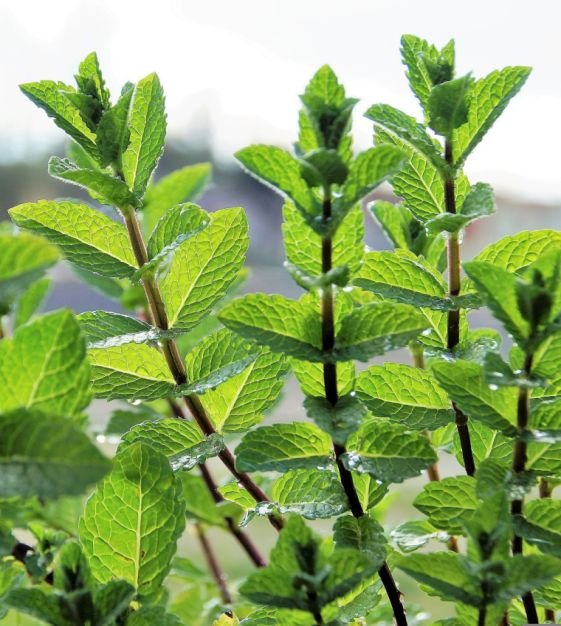
Botanical Description: A cross between wintermint and spearmint. A weedy vigorous, creeping perennial, with purplish leaf margins and pink or purple flowers growing in a spike.
Habitat: Thrives in fairly warm and moist climates and well-hydrated and drained soils. You can often find it growing near streams and other wet areas. Peppermint grows quickly and spreads easily.
Parts Used: Leaves
Key Constituents:
Volatile oils — menthol, menthone, and menthol acetate
Flavonoids — glycosides of apigenin, diosmetin, and luteolin
Phenolic acids — caffeic, chlorogenic, and rosmarinic acid
triterpenes; tannins; calcium; magnesium; potassium
Herbal Actions: Stimulant & Relaxant Diaphoretic, Rubefacient, Carminative, Analgesic, Spasmolytic, Mild Nervine, Decongestant
Taste: Pungent, Aromatic
Energetics: Cooling, Drying, Stimulant, Relaxant, Diffusive
Some Ways To Work With This Plant:
Peppermint’s volatile oils are really the primary source of the medicinal properties of the plant, especially the circulatory stimulating, dispersive, analgesic, and diaphoretic actions. Menthol can change how your brain registers sensations of taste and pain, which partially explains its analgesic property. It is also antispasmodic and acts as a calcium antagonist agent. Peppermint’s flavonoid and phenolic acid content lowers inflammation and protects your body from oxidative damage. Its triterpene content is antimicrobial and antiviral, its tannins tone lax tissues, and its remaining minerals nourish the body.
Digestive Support — The volatile oils relaxes tension in digestive muscles allowing it to offer relief for gas. A tincture or tea (made with a lid to keep these volatile oils from escaping via steam) can be a good way to work with peppermint for these benefits.
Chills and Fever — Peppermint has the capacity to both circulate heat throughout the body to ease chills during cold/flu while also being able to relax blood vessels and allow heat to vent out of body to cool down the body during a fever. It is the volatile oils that allow peppermint to have this quality.
Decongestant — The volatile oils in peppermint help thin out thickened mucus in the upper respiratory system and decongest the sinuses. Best done via hot tea—just make sure you inhale the steam as you drink so the volatile oils can go into your nose and decongest. You can also prepare tea in a big bowl and drape a towel over your head as you inhale the trapped steam. Just be sure to close your eyes as peppermint oil can irritate the eyes!
Muscle Tension and Pain — The menthol in peppermint acts as a topical analgesic and gives peppermint pain-relieving properties. Also, when peppermint oil is applied to skin, it increases blood flow to the area and moves stagnant lymph. This supports healing and alleviating pain. To work with peppermint fill a jar with dried peppermint leaves. Leave 3 inches of space above your herbs and fill the whole jar with oil. Cover, shake, and place in sunny part of home for 2-3 weeks. Strain the oil and use topically. Be sure to test on small patch of skin before appplying everywhere.
Itchy Skin — The menthol in peppermint supports in relieving itchy skin so it’s great for summertime bites, poison oak, stings, and itchy skin in general. To work with prepare a strong tea with peppermint, soak a towel into it and press it against the affected area.
Herbal Preparations:
Tea —
Add 1-3tsp of dried peppermint with 1 cup of already boiled water. Cover and let steep for 15 mins. Strain and enjoy.
Cool Your Temper Sun Tea: 40% lemon balm, 40% peppermint, 20% lavender— you can decide how strong you would like the flavor to be. Add to quart or half-gallon size jar and fill with water. Let the jar sit outside in a sunny spot for the whole day. Strain, stir in honey and put in the fridge overnight to cool down. Enjoy the next day over ice or by itself. If you don’t have lavender, you can just do equal parts lemon balm and peppermint.
Tried and True Fever Breakthrough Tea: Fill 1/2 a quart jar with equal parts dried peppermint, elderflower, and yarrow flower. Pour boiling water over herbs, cover, and let steep for 20 mins. Strain and drink tea, preferably in hot bath or bundled up. Great for adults of kids in breaking fever.
Follicle Stimulating and Scalp Cleansing Rinse: Add 2 handfuls of dried mint leaves to 1 cups already boiled water. Cover and steep for 20 mins. Let cool, strain and pour over head in the shower. Great to stimulate hair growth, cool itchy dry scalp, and detoxify from fungi, dandruff, and inflammation.
Tincture —
1 part of fresh leaves to 2 parts 190proof alcohol.
1 part dried leaves to 5 parts 150proof alcohol
Dosage: 10-30 drops, 1-4x/day
Pre-meal Tummy Support: 45% fennel, 45% peppermint, 10% ginger. Take few drops before eating to warm up digestive system and aid in preventing bloating and cramping after eating.
Glycerin —
1 part fresh leaves to 2 parts 100% glycerin.
Dosage: 20-60 drops, 1-4x/day
References:
Rose, Karen. The Art & Practice of Spiritual Herbalism. Fair Winds, 2022. Page 62
Popham, S. Materia Medica Monthly: Peppermint Monograph
Tilgner, Sharon. Herbal medicine: From the heart of the Earth. Wise Acres, 2020. Page 170
Brinker, Francis J. Herbal Contraindications and Drug Interactions Plus: Herbal Adjuncts with Medicines. Eclectic Medical Publications, 2010. Page 261
written by khadija khansia
This information is provided for educational purposes and is not intended to diagnose, treat, cure, or prevent any disease. Use with caution and consult with a doctor or herbalist before consuming if you are pregnant or on other medications. Please do your own research before consuming to know if this medicine is right for your body.