Thai Basil
Ocimum basilicum
Latin Name: Ocimum basilicum
Common Name: Horapha Nanum, Dwarf Anise, Chi Neang Vorng, Anise Basil, Licorice Basil, káu-chàn-thah, Hun Que
Family: Lamiaceae
Contraindications: N/A
Native To: Thailand, Vietnam, and Cambodia
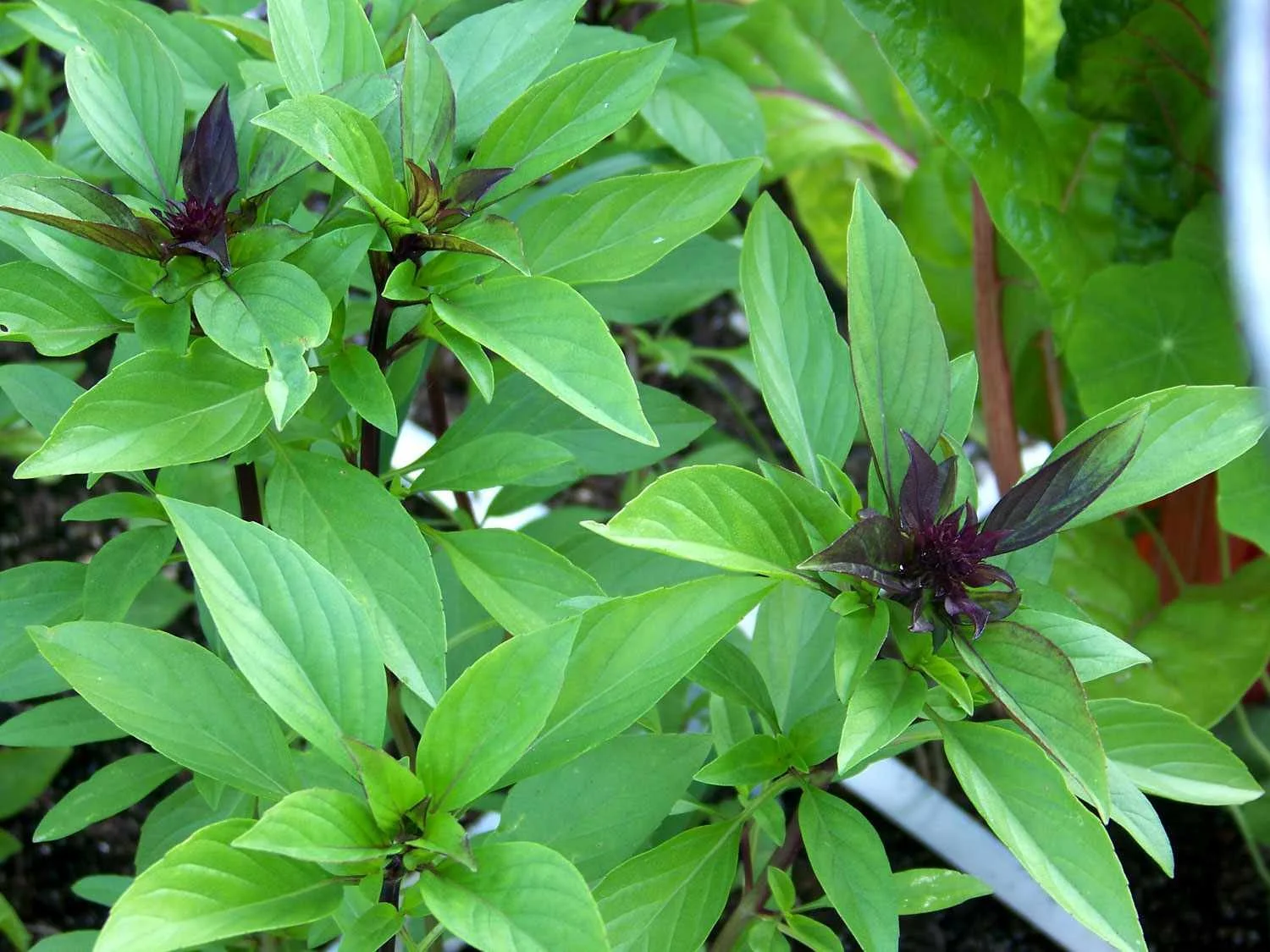
Botanical Description: Clusters of small mulberry/purple tubular flowers in summer. Dark purple/brown stems, Olive green/purple, oval pointed, hairy and slightly serrated leaves that have a very pungent scent and flavor.
Habitat: Thrives in temperate climates, requires fertile, well drained soil
Parts Used: Leaves and young flowering tops
Key Constituents: Volatile Oils (eugenol, estragole, and methyl eugenol, ******limonene, camphor, eucalyptol), vitamins A, C, and K, and various minerals
Herbal Actions: antioxidants, anti-cancer, anti-viral, anti-bacterial, and anti-fungal
Taste: Sweet, Bitter
Energetics: Warm, Pungent
Some Ways To Work With This Plant:
Digestive Support — The volatile oils present in thai basil contribute to it;s ability to allieviate indigestion, stomach cramps, and other digestive issues. This is why it is often used as a garnish for heavier meat-containing dishes.
Stress Relief, Mental Clarity, Headache — Volatile oils eugenol and linalool give thai basil a calming and clearing effect on the mind. A great way to work with the plant for these benefits is to make a cup of tea with the leaves.
Antioxidant — Thai basil is rich in antioxidants which can contribute to healthy skin, supporting immune system, and promoting overall well-being.
Herbal Preparations:
Stir-fries: Thai basil adds a delightful flavor to stir-fried dishes, such as Thai basil chicken or tofu with Thai basil.
Salads: For a refreshing twist, toss some Thai basil leaves into your salad or use them as a garnish.
Marinades: Infuse Thai basil into your marinades for meats and vegetables to enhance their taste and aroma.
Thai Basil Mojito: Muddle Thai basil leaves with lime, sugar, and rum, then top off with club soda. You can also choose to skip the rum and make this a refreshing mocktail!
Thai Basil Gin & Tonic: Infuse gin with Thai basil leaves, then mix with tonic water and a squeeze of lime. You can also choose to skip the rum and make this a refreshing mocktail!
References
Lawtrakul, Luckhana & Inthajak, Krit & Toochinda, Pisanu. (2014). Molecular calculations on β-cyclodextrin inclusion complexes with five essential oil compounds from Ocimum basilicum (sweet basil). ScienceAsia. 40. 145. 10.2306/scienceasia1513-1874.2014.40.145.
written by khadija khansia
This information is provided for educational purposes and is not intended to diagnose, treat, cure, or prevent any disease. Use with caution and consult with a doctor or herbalist before consuming if you are pregnant or on other medications. Please do your own research before consuming to know if this medicine is right for your body.