Thyme
Thymus vulgaris
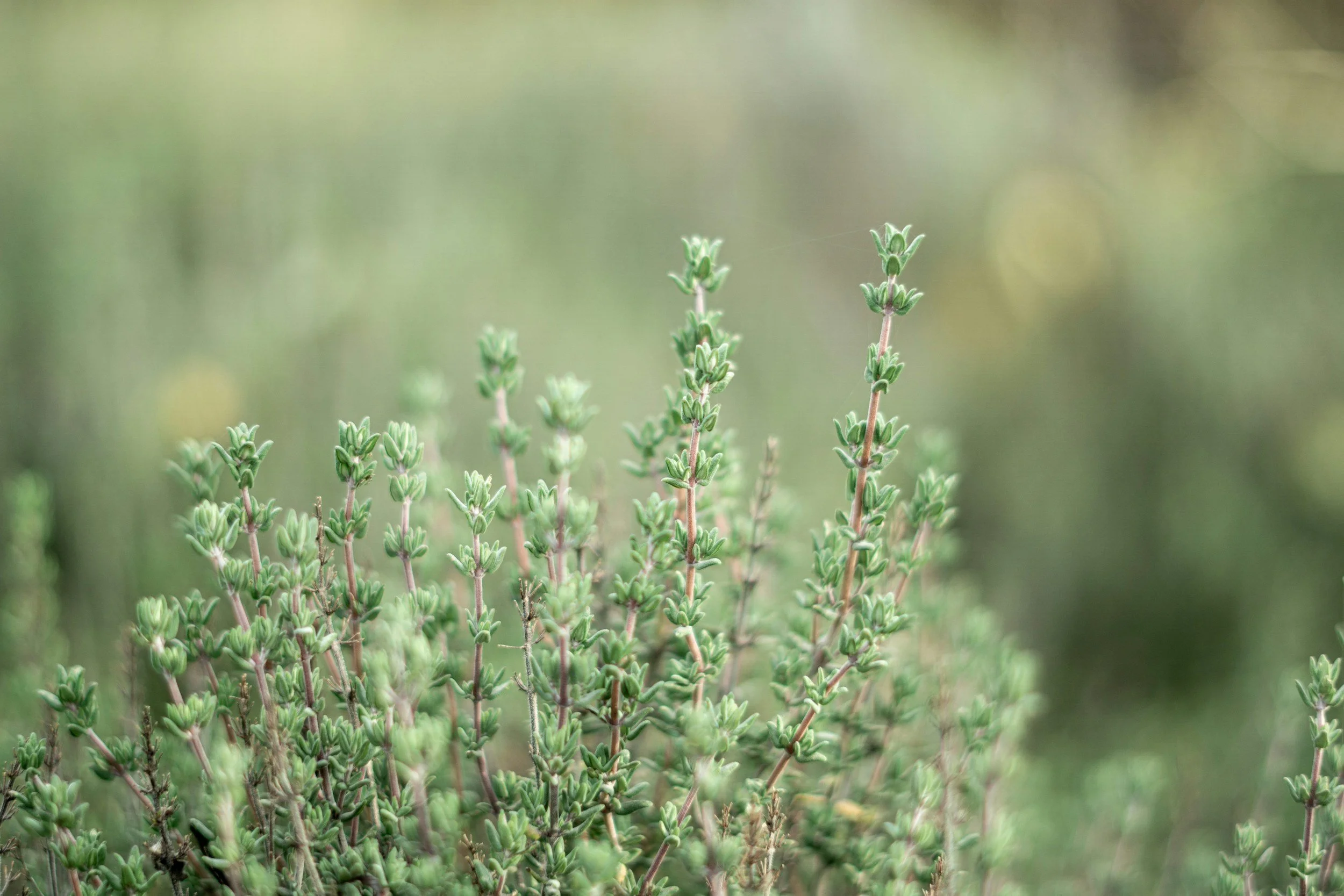
Latin Name: Thymus vulgaris
Common Name: English thyme, winter thyme, garden thyme
Family: Lamiaceae
Contraindications: Thyme oil is very irritating to skin. Use essential oil with lots of carrier oil and test on small patch of skin first. If making topical oil with it, use less thyme and test on small patch of skin.
Native To: Eurasia, North Africa, and Greenland
Botanical Description: Woody perrenial, grows upward to form a mound that's 6–12 inches tall and 6–16 inches wide. The leaves are linear, gray-green, and covered in fine hairs. The leaves are also covered in red-brown oil glands that look like small dots. In late spring to early summer, thyme produces small, tubular flowers that are usually purple or white.
Habitat: Rock or gravel gardens; cracks in paving or edge of paths; dry sandy rocky soils
Parts Used: Leaves
Key Constituents: Volatile Oils (thymol, carvacrol, borneol), Vitamin B, vitamin C, chromium, labiatic acid, antioxidants, manganese, tannin, flavonoids, saponins, triterpenic acids
Herbal Actions: Anthelmintic, antibiotic, antifungal, antimicrobial, antiseptic, antispasmodic, antitussive, aromatic, astringent, bronchodilator, carminative, decongestant, diaphoretic, diuretic, emmenagogue, expectorant, immunostimulant, rejuvenative, rubefacient, sedative (in small amounts), stimulant (in large amounts), vermifuge, vulnerary.
Taste: Pungent
Energetics: ****hot, dry, stimulating, aromatic
Some Ways to Work With This Plant:
Sleep Aid Volatile oils in thyme support it in relaxing the nerves in body. Aids in sleep that is disturbed where mind has low level anxiety from subconscious source.
Digestion Support: The parasympathetic relaxation supports rest and digest function of the body. The volatile oils warms up the digestive fire to aid sluggish, slow digestion, metabolic build up in intestines that may cause heartburn or gas. Supportive to help recover from eating allergen accidentally.
Respiratory Aid: The volatile oils in thyme support in opening up pores to detoxify body, thinning mucus, and moving fluids through the tissues. Very supportive for wet coughs where the mucus is yellow, green and/or thick causing constant spasmodic coughing where mucus has a hard time coming up. In this way, thyme acts as a decongestant and expectorant—creating generative coughs to clear out mucus. Create for herbal steams to help open up airways.
Cold/Flu Immune Support: Strengthens immunes system and helps alleviate fever by decreasing inflammation, increasing circulation of blood and fluids to support body in detox, waste process, and healing; opens pores to cause sweat which reduces fevers.
Topical Support: Antimicrobial and antibacterial nature is supportive for atheltes foot, dandruff, candida, insect bites, wounds, etc. Use thyme essential oil with lots of carrier oil for this or create thyme infused oil for topical use.
Herbal Preparations:
Tincture: tincture fresh leaves to capture the volatile oils best. Does 15-20 drops, 2-3x/day and once before bed (Matthew Becker). Pair with lemon to increase taste.
Time Infused Olive Oil for cooking/eating: Add dry thyme sprigs to bottle of olive oil and let infuse for 4-6 weeks and strain. Or keep thyme in olive oil indefinitely and let it continue to infuse the oil over time.
Tea: Add 1-2tbsp to already boiled water. Add lemon and honey to increase flavor. Drink to create generative coughs to bring up mucus in respiratory infections.
References:
Wood, M. The Earthwise Herbal, Volum I. North Atlantic Books, 2008 .
written by khadija khansia
This information is provided for educational purposes and is not intended to diagnose, treat, cure, or prevent any disease. Use with caution and consult with a doctor or herbalist before consuming if you are pregnant or on other medications. Please do your own research before consuming to know if this medicine is right for your body.