Tulsi
Ocimum africanum
Latin Name: Ocimum africanum
Common Name: Tulasi, Kapoor Tulsi, Vrinda, Holy Basil, Sacred Basil, Queen of Herbs, Incomparable One
Family: Lamiaceae
Contraindications: Do not take if pregnant. May slow blood clotting so avoid taking 2 weeks before or after surgery. If your body’s constitution is naturally hot, avoid taking tulsi. Do not take if with anticoagulant and antiplatelet medication. Use with caution if you are taking medication that regulates your blood sugar since it has a blood sugar regulating effect. May increase metabolization and elimination of medication, decreasing efficacy. Take several hours apart from medication.
Native to: True Tulsi (Ocimum tenuiflorum) is native to north central India and grows native throughout southeast Asia and Africa. The temperate variety that we are growing this season (Ocimum africanum) is actually of East African origin.
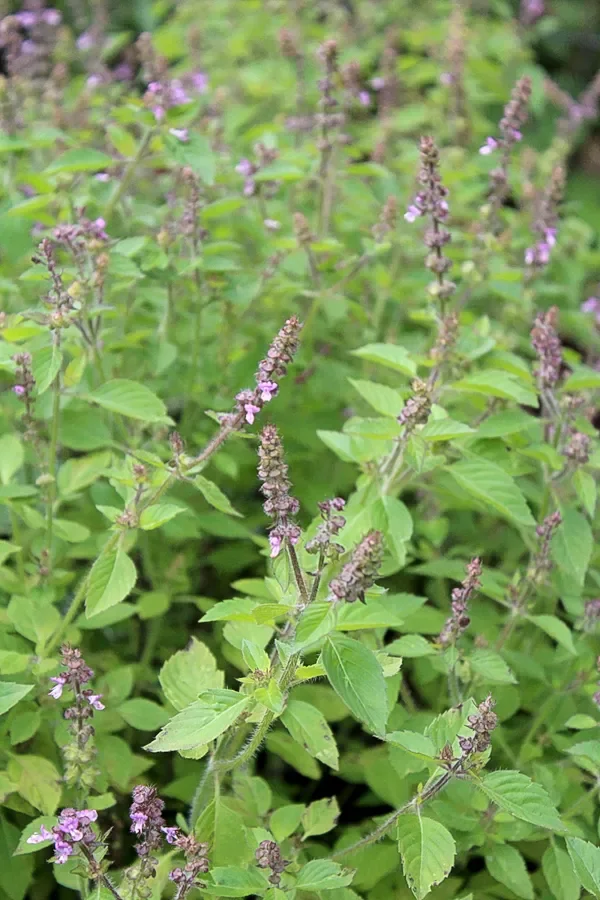
Botanical Description: Annual shrub in this region that grows up 3’ in height. The stems are hairy and bear simple toothed or entire leaves oppositely along the stem. The fragrant leaves are green. The small purple tubular flowers have green or purple sepals and are borne in terminal spikes. The fruits are nutlets and produce numerous seeds.
Habitat: Grows in temperate regions, preferes moist to wet soils.
Parts Used: Leaves and flowers
Key Constituents: fatty acids, tannins, volatile oils (eugenol, linalool, nerol, geraniol, citral, icocaryophyllene, humulene), camphor, flavonoids, triterpenes, and phenolic compounds (antioxidants). Holy Basil also contains several nutrients, such as vitamin A, vitamin C, beta carotene, iron, manganese, calcium, and zinc
Herbal Actions: Nervine, Adaptogen, Nootropic, Carminiative, Antispasmodic, Circulatory Stimulant, Diaphoretic, Blood Sugar Regulator, Diuretic, Galactagogue
Taste: Pungent, Bitter, Sweet
Energetics: Hot, Relaxing, Drying
Some Ways To Work With This Plant:
Nervine Relaxant — Tulsi supports our bodies in becoming more resilient to stress factors and respond with less intensity when stimuli arise. Great for hypersensitive nervous systems that are just on the brink of burnout and experiencing mental fatigue. The volatile oils present in tulsi allow it to does this by relaxing the muscles in our nervous system allowing our mind to feel al little bit more at ease. Great to ease the mind if there is tension from overthinking. It’s vitamins and minerals help nourish the body and the mind. To capture the vitamins, minerals, and essential oils that make a tulsi a nervine relaxant, a tincture or vinegar/oxymel is the way to go. If you decide to drink tulsi in tea form, just be sure to put a lid over the tea as it steeps so that the volatile oils do not evaporate off in the steam.
Cognitive Support — The volatile oils also contribute to it’s ability in being a circulatory stimulant which allows it to support in increasing blood flow to the brain and lend to it’s nootropic benefits. Tulsi reduces excessive nervous tension, calms the nerves, and increases circulation to the brain which is super supportive for memory recall, brain fog, grogginess, and lack of focus. Traditionally, this is why tulsi has been used as a meditation aid. Again, vinegar/oxymel or tincture capture the medicine for these benefits the best. A tea can also work, just be sure to cover the cup to capture the volatile oils. You can also just eat tulsi leaves raw.
Insulin Resistance/Type II Diabetes — Tulsi contains triterpenes which prevent and reverse insulin resistance while normalizing glucose and insulin levels. Tulsi reduces blood sugar levels, increases cellular sensitivity to binding of insulin, helps cellular gate channels open and bring sugar into the cell from the blood. supports liver metabolism and protects liver, stimulates circulation to bring blood to periphery and surface. To work with tulsi for these benefits, a tincture best extracts the triterpenes responsible for these benefits.
Tense, Cold, Stagnant Digestion — Tulsi’s volatile oils lend to it’s warming and circulatory stimulant actions which bring blood flow to the digestive system, moving stuck, stagnant, slow, sluggish digestion. These volatile oils also lessen tension, bloating, and gas in the digestive system. The relaxant properties ease abdominal cramping. Lastly, tulsi’s slight bitter taste increases bile and enzymes which support the break down of fatty rich food. A tincture or vinegar/oxymel would work nicely to capture those volatile oils, but a tea also works.
Fever and Phlegmy Cough — Tulsi’s volatile oils are supportive for fevers that are accompanied by a lot of mental and physical tension. It helps gently raise temp, dilate capillaries to increase blood flow, and open pores to release heat via sweat. Tulsi camphor flavanoids also helps thin thick mucus and relax tissues in respiratory system allowing you to have a productive cough to release thick stuck phlegm. Only take tulsi for respiratory ailments if the mucus is clear or white not yellow. Tulsi is also great at drying up post nasal drip. A tincture or a hot tea made from tincture is great for this use case.
Herbal Preparations:
Tea
Add 1 tbsp of dried tulsi to 8oz of already boiled water. Cover and steep for 15-30 mins. Drink 2-3 cups/day.
Tummy Tea: Equal parts tulsi, catnip, and lemon balm.
Oxymel
Chop up fresh tulsi and fill jar up 1/4 way up. Fill the rest of jar up with equal parts apple cider vinegar and honey. Let it extract for 4 weeks. Strain, bottle up, and store in cool dark place.
Heart Oxymel: Add 3/4 cup dried tulsi + 2tbs dried hibiscus to 1/3 cup honey and 1 cup of apple cider vinegar. Shake and let is sit for 2-4 weeks. Strain and store in the fridge.
Tincture
1 part fresh leaf and flower to 2 parts 150proof alcohol
1 part dried leaf and flower to 5 parts 100proof alcohol
Folk method: chop up fresh tulsi leaves, flowers, stems and stuff in jar. Cover with 150 proof alcohol and let it extract for 4-6 weeks. Strain the tincture out and bottle up and store in cool dry place.
Dosage: 30-60 drops 3x/day
Tincture for Day to Day Scaries: Equal parts chamomile, tulsi, lemon balm, skullcap, and motherwort tincture.
References:
“The role of triterpenes in the management of diabetes mellitus and its complications” (http://www.ncbi.nlm.nih.gov/pmc/articles/PMC4513225/)
Winston, David and Maimes, Steven. Adaptogens: Herbs for Strength, Stamina, and Stress Relief. Healing
Arts Press. Rochester, Vermont. 2007. Page 170
Popham, Sajah. Materia Medica Monthly: Holy Basil. 2023
written by khadija khansia
This information is provided for educational purposes and is not intended to diagnose, treat, cure, or prevent any disease. Use with caution and consult with a doctor or herbalist before consuming if you are pregnant or on other medications. Please do your own research before consuming to know if this medicine is right for your body.